
Topic:
Environmental Issues
These blog posts explore various environmental topics and issues from energy insecurity, plastic pollution, transportation, and the climate crisis and offer solutions to our most pressing environmental problems.
Environmental Issues, Green 2.0 Fellows, Identity, Inclusion, and Community Engagement
El Pueblo Unido Jamás Sera Vencido (The People United will Never be Defeated)
Alyssa Rae Garza is pursuing their master’s degree in sociology at the University of Texas in El Paso, and developed a passion for climate justice after learning about environmental injustices in their hometown. She participates and learns from local grassroots coalitions and movements while applying an intersectional and jotería-muxerist (queer-Chicana/Latina/Latinx) lens to shape community organizing practices.
Read More Environmental Issues, Green 2.0 Fellows, Identity, Inclusion, and Community Engagement
Air Pollution: Black Communities are “Sacrifice Zones”
Shaila Vester-Skinner is a 2022 Winter Fellow at Green 2.0, and currently majoring in Environmental Science and Policy with a Concentration in Human response to climate change at George Mason University. In this blog post to mark Black Climate Week, Shaila writes about how air pollution has disproportionately affected Black and POC communities and why this needs to change. This story resonated with Shaila because as a Black woman, she doesn’t want to continue to see other POC/Black citizens endure these conditions.
Read More 
Environmental Issues, Green 2.0 Fellows
Coastal Considerations: Improving NGO Engagement with Coastal Communities of Color
Green 2.0 sought to understand the state of engagement by nongovernmental organizations (NGOs) with coastal communities of color. Green 2.0 held a convening with representatives of allied organizations in early 2021. However, it soon became apparent that little literature exists on the subject, at least in a form designed to be digested and acted upon by organizations.
Read More 
Environmental Issues, Green 2.0 Fellows, Identity, Inclusion, and Community Engagement
How Deteriorating Environmental Conditions Cause Migration Surges
Alejandro Galicia Cervantes is a 2021 Fall Fellow at Green 2.0 and a current senior at the University of California - Davis, pursuing a bachelor's degree in economics and political science. He is a community changemaker by craft, program developer by training, an entrepreneurial scholar at heart: His mission is not only to curate a longitudinal study mapping legal status disparities but to build systems to support our most vulnerable communities. To mark International Migrants Day taking place on December 18, Alejandro writes about how deteriorating environmental conditions displace individuals around the world.
Read More 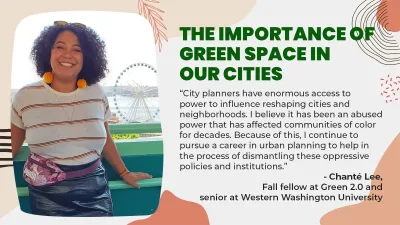
Environmental Issues, Green 2.0 Fellows, Identity, Inclusion, and Community Engagement
The Importance of Green Space in Our Cities
Chante Lee is a 2021 fall fellow at Green 2.0. She is currently a senior at Western Washington University in Bellingham, Washington where she is finishing her last quarter as an Urban Planning and Sustainable Development major with a focus in Environmental Justice. She has also been extremely involved in the Ethnic Student Center on campus. In addition, Chante has worked at Starbucks part-time as a barista since high school and throughout college. She loves collecting houseplants and cooking new recipes. In this blog post, Chante discusses the importance of green space accessibility and her interest in pursuing urban planning as a career.
Read More 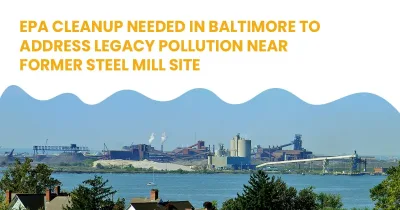
Environmental Issues, Identity, Inclusion, and Community Engagement
EPA Cleanup Needed in Baltimore to Address Legacy Pollution Near Former Steel Mill Site
The Chesapeake Bay Foundation is an independent conservation organization that uses advocacy, education, environmental restoration, and litigation to protect and improve the health of the Chesapeake Bay. In this guest blog post, the foundation examines a case of long-term environmental injustice near Baltimore, Maryland, and how the wrongs of the past could be addressed.
Read More 
Environmental Issues, Policy and Advocacy
A Q+A with UNDP’s Cassie Flynn on the Climate Crisis and Upcoming COP26
Change at the United Nations Development Programme. In this Q+A, she discusses with Green 2.0 the Intergovernmental Panel on Climate Change (IPCC) report, the goal for the COP26 UN Climate Change Conference happening next month in November, and how to have hope amid the climate crisis.
Read More 
Environmental Issues, Identity, Inclusion, and Community Engagement
Indigenous-Led Marine Conservation Should Be the Future of Our Movement
Angelo Villagomez, senior officer at The Pew Charitable Trusts, is the campaigns manager for Blue Nature Alliance, a global partnership that seeks to protect 18 million square kilometers of ocean in support of the global goal to protect at least 30 percent of nature by 2030. Villagomez, who identifies as Indigenous Chamorro, is a co-author on a recent scientific publication, Advancing Social Equity in and Through Marine Conservation, and in this guest blog post for Green 2.0, he writes about how including Indigenous peoples in conservation can lead to more durable outcomes.
Read More 
Environmental Issues, Green 2.0 Fellows, Identity, Inclusion, and Community Engagement
Wellness and Inclusivity in the Great Outdoors
Sage Renninger is a fellow at Green 2.0 and a student at Washington State University studying Environmental Science and Sustainability. Honoring National Wellness month, Sage has featured ways in which the outdoors can support physical and mental wellness in our day-to-day lives. Getting outside has helped Sage increase her own physical and mental health, and she believes creating an inclusive space where BIPOC communities can utilize nature is critical in combating systemic injustice.
Read More 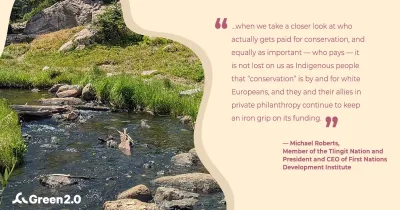
Environmental Issues, Identity, Inclusion, and Community Engagement
Indigenous communities are once again paying as conservation groups continue to get paid
Michael Roberts, a member of the Tlingit Nation, is the president and CEO of First Nations Development Institute. First Nations works to strengthen American Indian economies to support healthy Native communities. This blog post was written in accordance with International Day of the World’s Indigenous People and to call for economic policy changes to the way conservation and environmental movements are being funded.
Read More