

Networking When You’re Not “Built” for Networking
By Marilyn (Mar) Zepeda Salazar
Marilyn (Mar) Zepeda Salazar is an environmental justice leader working to ensure that communities are leading the way in protecting their land, water, and environment. From policymaking on Capitol Hill to informing community-led policy solutions, she is a champion for centering the communities most impacted by environmental issues. In this post, she explores the complex relationship she has to networking and the many intersectional identities we face as we approach a core environmental career building skill. She offers her own experiences with tangible tips of how to network in ways that are true to your culture, background, identity, and own needs.
First A Bit Of Personal Context
I have a complicated relationship with networking. I really dislike it. It drains me. In Washington, D.C., it’s practically a second language, one I didn’t grow up speaking. When I first arrived in the city I was working in Congress and I was in my mid twenties. The quantity of receptions and networking events felt overwhelming, it was an entirely new concept for me. It felt like everyone knew the unspoken rules: when to jump into a conversation, how to reference the right offices, and how to drop acronyms and names. Meanwhile, I was still reading the room and reminding myself: “language, culture, tone,” trying to figure out what counted as confidence versus what came off as “too much” or “not enough.”
But then I would shut down. I would hear the type of conversations people would have and in my head I was in a utopia where everyone solely cared about titles, rank, and relevance. I would always ask myself: “Is this why people come to work in Congress?” … Then there’s introversion. I don’t walk into rooms energized by a sea of strangers. I scan for exits, for a familiar face, for a corner where I can breathe. Add social anxiety layered with being an immigrant worrying about my accent, my phrasing, whether I missed a joke or a cue; and networking stops feeling like opportunity and starts feeling like performance that requires high-energy loads. For introverts, our energy is sacred. I would need to hide for four days after a two-hour networking event!
For those of us who are neurodivergent, it’s another layer. ADHD brains that bounce between conversations, lose track of names the second we hear them, that hyperfocus on one connection and forget to circulate, it’s even harder. You’re trying to be present, remember details, regulate your nervous system, and appear “on” all at once. It’s exhausting. And no, neurodivergence is not a negative notion, but I note it because our society is not set up in a way that welcomes or nurtures that, especially in the “DC hustle culture” people live in.

And yet, our work, our communities, our futures often depend on building relationships in spaces that were not designed with any of this in mind.
So you may ask: what does networking look like when you are like me? Introverted. Anxious. Navigating cultural differences. Neurodivergent.
For me, it’s been a slow reframing. Being in my thirties and learning to own my story has helped a ton. I’ve come to understand that networking isn’t about being the loudest or the most visible person in the room. It’s about connection. Curiosity. Alignment. It’s about building something that lasts longer than a handshake.
It’s also about giving yourself permission to do it differently. Genuinely. And yes, sometimes I’ve done an honest energy and body scan and decided to stay home or spend time with people I feel safe with. And sometimes, that was the right decision.
The Parts We Don’t Say Out Loud
We don’t talk enough about how much invisible labor marginalized people carry into networking spaces.
You’re not just introducing yourself, you’re reading the room for safety.
You’re deciding how much of your story to share.
You’re code-switching. (All. The. Time.)
You’re managing assumptions before they’re spoken.
You’re also navigating a city with its own rhythm and shorthand. DC slang, Hill culture, nonprofit vs. policy vs. advocacy language. If you didn’t grow up in these spaces, it can feel like everyone else got a manual you didn’t. (Time here helps but it takes time.)
And for introverts, the advice we often hear is: “just put yourself out there,” “talk to everyone,” “work the room.” This doesn’t feel personal, aligned, or even possible.
But here’s the truth I wish someone had told me earlier (and yes, this took me years to reconcile with):
You don’t need to work the room.
You need to find your people in the room.
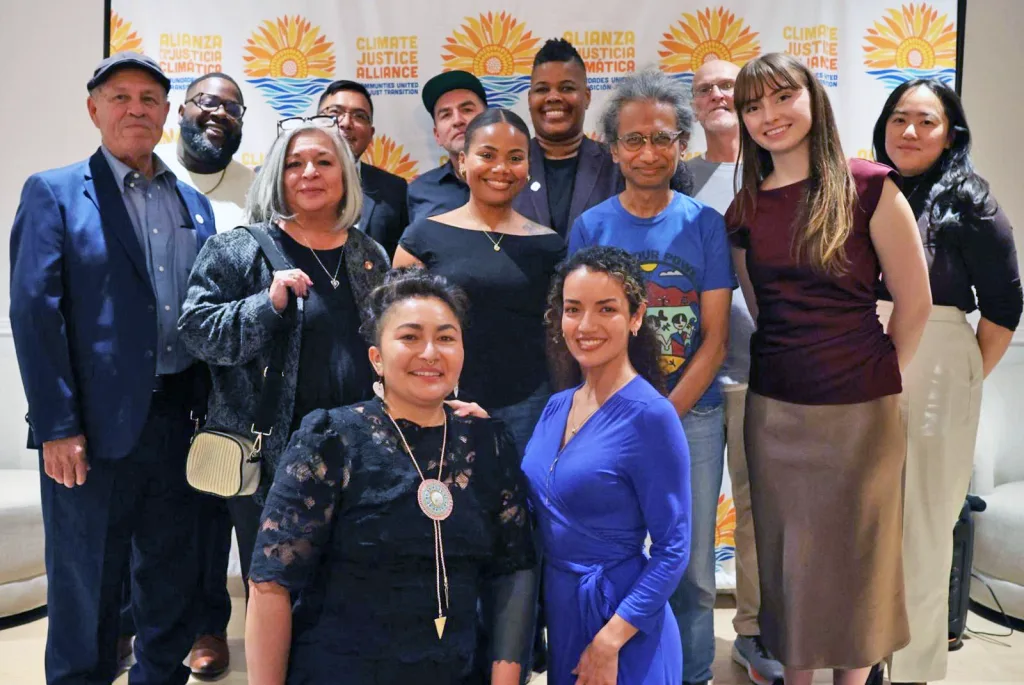
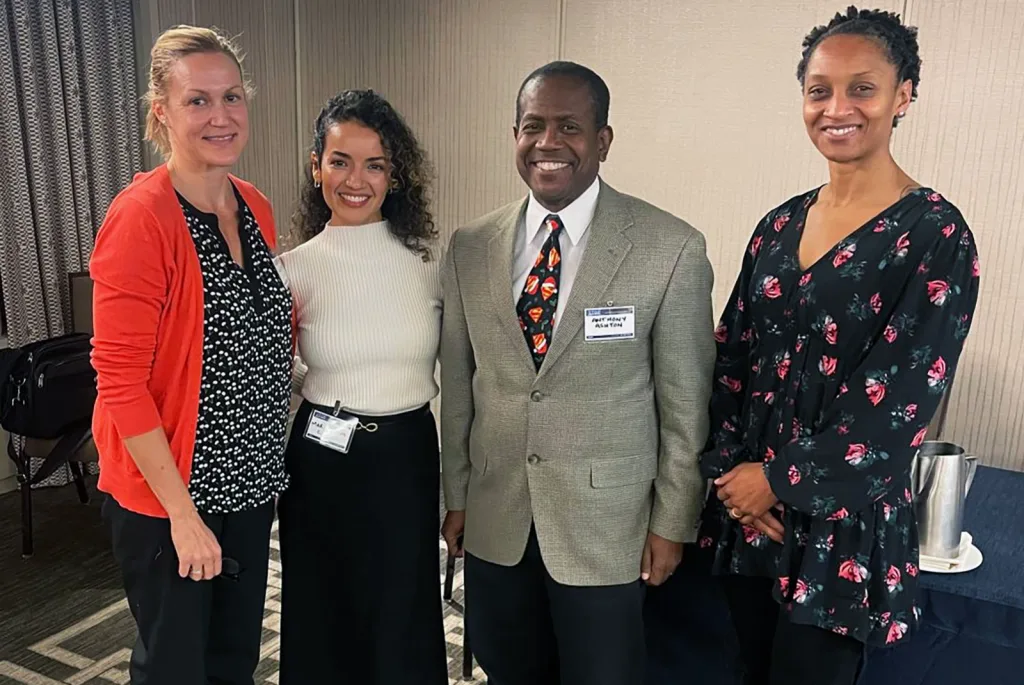
Here’s My Attempt to Tips that May Help You
(after years of, well, struggle and hiding near a wall)
TIP 1: Redefine what networking actually is
To me, networking is not a numbers game. It’s not about collecting business cards or LinkedIn connections. It’s about building a few meaningful relationships with people who align with your values, your work, and your growth.
TIP 2: Be strategic about who you want to learn from
Before an event, ask yourself: Who do I want to become? Then identify people in the room who embody pieces of that, whether they are skills, leadership, storytelling, policy knowledge, organizing experience, or even character and presence. Those are your anchors. Look for people you have something to learn from, even if you don’t yet know what your future looks like.
TIP 3: Go in with a simple intention
Not “I need to meet 10 people.” Try: “I want to have two real conversations.” That’s it. That’s success.
TIP 4: Use your introversion as a strength
Introverts tend to listen deeply, ask thoughtful questions, and remember details. That is powerful. People remember how you made them feel, not how loudly you spoke.
So, if you observe someone grabbing a specific dish or connecting with someone you wanted to connect with, use that:
- “I noticed you grabbed the deviled eggs, how were they? I was curious to try, should I?”
- “So and so was so busy talking with many people at this event! What was your experience with them? Do you know them from previous experiences?”
TIP 5: Give yourself language you can rely on
If DC culture or slang throws you off, prepare a few grounding phrases:
- “I am new to this city and I would welcome learning more about X subject. Could you share more?”“I’d welcome the opportunity to hear more about your work on…”
- “What is something you enjoy about your work? Did your 13 year old self see themselves here?”
- “What brought you to this city, or this reception?”
- “What’s something you wish more people understood about your work?”
- “What is a positive highlight from your week?”
You see, our brains are wired for real connection. In order to connect, we don’t need cleverness. We need sincerity.
TIP 7: Follow up with intention and confidence
The magic is in the follow-up. A short message like:
“It was great meeting you and hearing about your work on X. [Insert something you remember about that conversation or connection, like something in common, a dish you both enjoyed, a picture you took, etc.] Hope we can be in touch!”
That’s it. You don’t need to impress, just connect and be yourself. Yes, being yourself can feel vulnerable, you won’t win all the time but just know you were being genuine to yourself.
TIP 8: Remember: you belong in these rooms.
Your lived experience, your perspective, your story are not deficits. They are expertise. The room needs you, even if it doesn’t yet know how to make space for you.
The Reframe I Keep Coming Back To
Networking is not about becoming someone else to fit the room. It’s about finding the people who see you as you are, and the people you want to grow alongside.
It’s about choosing:
Depth over volume.
Alignment over access.
Intention over performance.
And if you’re introverted, anxious, an immigrant navigating DC culture, or neurodivergent, know this:
You are not bad at networking.
You’ve just been taught a version of it that is extractive instead of intentional.
You are allowed to do it differently.
And you are allowed to do it well, in your own way.
People are also looking for people like you even if you don’t know it.
And if you are in the perimeter of that room or of that conference room and you decide not to enter, you’re no less intelligent, nor relevant for choosing that. Honor it. And try again when you can challenge yourself again.
Un paso a la vez (one step at a time.)