

Featured blog post
For leaders of color who are fighting to protect the environment and their own communities the pressure to prioritize work and mission is even more ever-present. We asked leaders more about this pressure, how their organizations demonstrate their commitment to work-life balance, and how they prioritize it themselves even when it’s difficult.
Explore blog posts by topic:
Previous Blog Posts:

Environmental Issues
HOT & COLD NYC: Revealing the Faces and Places of Energy Insecurity
Shane Araujo is a research assistant and the junior editor for the Hot & Cold NYC team at the Energy, Equity, Housing, and Health program (E2H2 at Columbia University Mailman School of Public Health) led by Dr. Diana Hernández.
Read More 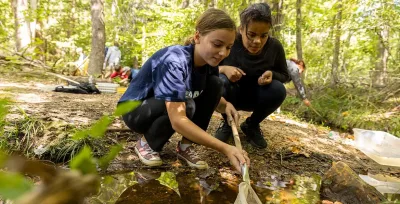
Organization Spotlights
Chesapeake Bay Foundation
Founded in 1966, the Chesapeake Bay Foundation (CBF) is the largest independent conservation organization dedicated solely to saving the Bay. Serving as a watchdog, we fight for effective, science-based solutions to the pollution degrading the Chesapeake Bay and its rivers and streams.
Read More Environmental Issues, Identity, Inclusion, and Community Engagement
Mobilizing for Environmental Change – How Infrastructure Can Accelerate Progress
Jennifer is a Program Officer for Mosaic, a national grantmaking initiative focused on building a bigger, more influential environmental movement.
Read More 
Green 2.0 Fellows, Identity, Inclusion, and Community Engagement
Catch Me Outside with my Dark Skin, Sapphic Gaze, and Feet covered in Soil
In this blog, Green 2.0 Fellow Ki'Ana Speights explores how their identity as a Black, Queer person intersects with the ecological world, and how they work to reclaim their space in nature. They dissect how White-heteronormative binaries were designed to exclude BIPOC people and make them feel othered. Through the lens of queer ecology, they imagine a future where society can accept and reflect the fluidity of nature.
Read More 
Environmental Issues, Green 2.0 Fellows, Identity, Inclusion, and Community Engagement
Embracing Your Heritage Doesn’t Mean You Need To Eat Meat
In this blog, Green 2.0 Fellow Kevin Hernandez discusses the colonization of Mexico and how it streamlined Mexican food becoming meat-centric along with his experience as a vegetarian Mexican-American. He proposes that people try to understand their culture and encourages them to try a plant-based diet.
Read More